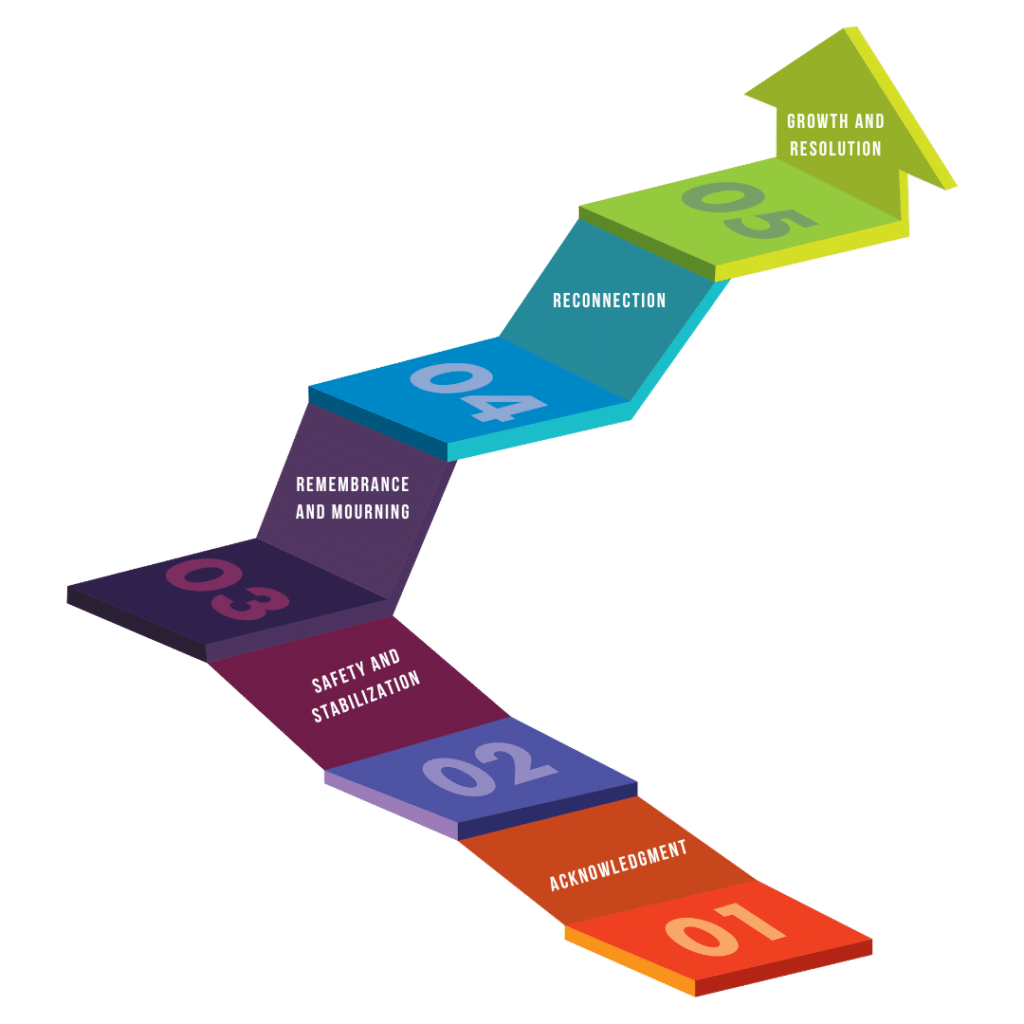
Injury doesn't adhere to a foreseeable timeline for recovery. Typical talk therapy aids lots of people procedure tough experiences, yet some memories stay stubbornly resistant to conventional methods. Eye Motion Desensitization and Reprocessing (EMDR) and Accelerated Resolution Treatment (ART) have become effective choices for individuals whose injury symptoms continue despite years of therapy. These evidence-based therapies supply pathways to relief that can really feel remarkably faster than typical methods, in some cases producing substantial changes in simply a couple of sessions.
Why it's hard to heal from trauma Three challenges of trauma
Eye Activity Desensitization and Reprocessing represents a standard shift in injury therapy. Created by Francine Shapiro in the late 1980s, EMDR treatment operates on the concept that stressful memories come to be "" stuck"" in the brain's processing system, keeping their psychological charge and causing power long after the original event. Unlike typical treatment that counts largely on verbal processing, EMDR utilizes bilateral stimulation-- typically eye movements, faucets, or tones-- to assist in the brain's natural recovery devices.
The procedure entails recalling stressful memories while at the same time participating in reciprocal excitement. This double interest shows up to permit the mind to recycle stuck memories, lowering their psychological intensity and incorporating them into broader life narratives. Clients often describe the experience as enjoying a motion picture of their trauma that gradually sheds its power, transforming from a natural experiencing again into a farther recollection.
What makes EMDR specifically engaging is the extensive study supporting its effectiveness. The World Health And Wellness Organization, American Psychiatric Organization, and Division of Veterans Matters all recognize EMDR as an evidence-based therapy for injury and PTSD. Researches continually demonstrate that EMDR creates outcomes equivalent to or much better than conventional trauma-focused cognitive behavior treatment, frequently in less sessions.
The 8 Phases of EMDR Treatment
EMDR treatment adheres to a structured eight-phase protocol that makes certain detailed treatment. The process starts with history-taking and therapy preparation, where specialists recognize target memories and evaluate customer readiness for trauma processing. This preparation phase proves crucial-- therapists instruct grounding methods and dealing abilities that clients can make use of if handling comes to be frustrating.
The analysis phase involves identifying particular memories, unfavorable beliefs connected with those memories, and desired favorable ideas. A memory of a cars and truck crash could carry the negative cognition "" I'm not risk-free,"" which treatment intends to replace with "" I survived and I'm secure currently."" Clients rank their distress degrees and belief toughness, providing measurable pens of progress throughout treatment.
Desensitization-- the heart of EMDR-- includes recalling the target memory while following the specialist's relocating hand or involving with reciprocal taps or noises. Handling continues up until the memory's psychological cost diminishes dramatically. Installation reinforces the positive belief, while body scan ensures no recurring physical stress continues to be. Closure and reevaluation phases total each session and evaluate progression in time.
Sylvia Lagosky
5/5
I know Vivienne as a colleague and she is compassionate and really knowledgeable ART and EMDR therapist in Calgary. I refer many clients to her due to her skills and extensive training. Do yourself a favor and see Vivienne if you need support!
Accelerated Resolution Treatment improves EMDR's structure while introducing distinct aspects made to expedite recovery. Established by Laney Rosenzweig in 2008, ART shares EMDR's use eye motions however integrates imagery rescripting methods that permit customers to emotionally "" change the network"" on distressing memories. This technique usually produces remarkable lead to remarkably brief durations-- usually one to 5 sessions.
The sped up nature of ART stems from its straight targeting of sensory memories. Instead of comprehensive spoken processing, ART concentrates on changing troubling images with neutral or favorable ones while retaining valid memory of events. An expert might remember the realities of a combat experience without the intrusive headaches and flashbacks that formerly accompanied those memories.
ART therapy shows specific effectiveness for single-incident traumas like mishaps, assaults, or medical treatments. The method enables clients to maintain the content of their injury private if desired-- therapists do not require detailed spoken summaries to help with reliable processing. This attribute interest individuals reluctant to verbally state uncomfortable experiences or those worried about confidentiality in certain expert contexts.
EMDR Intensives: Concentrated Healing in Compressed Timeframes
Typical weekly therapy sessions work well for many individuals, however some circumstances call for more extensive intervention. EMDR intensives condense therapy into longer, more frequent sessions-- in some cases full or half-day visits over consecutive days. This layout allows much deeper handling without the disturbance of returning to every day life between typical 50-minute sessions.
Intensives especially profit people dealing with specific terrible occasions, preparation for significant life changes, or those who've plateaued in conventional therapy. The concentrated style produces energy that can break with resistance and enable handling that may take months in regular sessions. Travel from out of state comes to be possible when therapy presses right into a week or lengthy weekend break instead of requiring months of routine appointments.
Durability Now and comparable specific techniques typically structure intensives around individual requirements, incorporating EMDR with corresponding methods like somatic treatment or mindfulness methods. The extensive style calls for mindful preparation and follow-up support to make sure customers can incorporate their handling and maintain gains after returning home.
Treating Anxiety with EMDR and ART
While EMDR and ART developed their reputations dealing with injury and PTSD, both strategies show performance for anxiousness conditions even without clear traumatic beginnings. Panic condition, social anxiousness, and generalized anxiousness commonly have roots in earlier experiences that may not certify as capital-T injury but however produced lasting patterns of concern and avoidance.
EMDR targets the memories, scenarios, and triggers that gas present stress and anxiety. Someone with social anxiety might process early experiences of shame or rejection that established beliefs regarding being judged or insufficient. As these memories lose their emotional cost through reciprocal excitement, present-day anxiety signs and symptoms usually lessen substantially.
ART's rapid handling makes it particularly appealing for individuals whose anxiety hinders job, partnerships, or lifestyle. The possibility of purposeful alleviation within a handful of sessions encourages people that could or else delay looking for therapy. Both methods provide hope that anxiety does not need years of administration-- it can possibly fix through targeted reprocessing of the experiences that developed nervous patterns.
Somatic Components of Trauma-Focused Therapy
Healing Childhood Trauma Takes 1-3 Years, Research Says
Both EMDR and ART acknowledge that trauma lives in the body as high as the mind. Distressing memories typically materialize as physical feelings-- tightness in the breast, nausea, muscular tissue tension-- that continue also when the original threat has passed. Reliable injury therapy addresses these somatic elements rather than concentrating solely on ideas and feelings.
During EMDR handling, clients track physical sensations as memories shift. Tension could at first increase prior to launching, or new feelings might become handling proceeds. Specialists lead attention to these body experiences, permitting them to inform and progress the reprocessing work. The body scan stage especially makes certain that no residual physical holding patterns continue to be after cognitive and psychological processing finishes.
This somatic understanding shows particularly essential for complex trauma, where hypervigilance and physical reactivity become embedded survival reactions. Learning to track and release body-based trauma actions aids clients recover a feeling of safety and security and visibility that injury had actually taken.
Selecting Between EMDR and ART for Your Demands
Both EMDR and ART provide powerful injury treatment, however certain elements might make one better for your particular scenario. EMDR's extensive research base and eight-phase structure attract people who value extensively validated strategies and appreciate clearly defined treatment procedures. The method's adaptability permits adaptation for intricate trauma, accessory injuries, and recurring tough situations.
ART's quick outcomes make it perfect for single-incident trauma, particular fears, or scenarios requiring fast resolution. The privacy managed by marginal spoken disclosure advantages some clients, while others could miss the processing that comes from talking through experiences. Some experts integrate both approaches, making use of ART for discrete memories and EMDR for even more intricate discussions.
What to Anticipate From Trauma-Focused Treatment
Beginning EMDR or ART requires readiness to engage with painful memories, even as the handling itself minimizes their impact. Initial sessions focus on building resources and ensuring sufficient coping abilities exist for taking care of prospective distress. Quality trauma therapists never hurry into handling before establishing safety and stablizing.
The experience of reciprocal excitement varies-- some individuals barely see eye motions or faucets, while others find them originally unusual or disruptive. A lot of clients adjust promptly, and the reciprocal part soon fades into background awareness as handling takes center phase. Between sessions, new insights, memories, or emotions might surface as the mind continues incorporating product.
Progress does not always adhere to a straight path. Some sessions generate significant changes while others really feel slower or much more difficult. Relying on the process and maintaining dedication through varying experiences permits the complete benefit of these methods to arise. Follow-up sessions assess whether processing holds and resolve any kind of continuing to be targets or brand-new product that surfaces.
Discovering Qualified EMDR and ART Specialists
Not all specialists using EMDR or ART have equivalent training or experience. Standard EMDR training needs completion of accepted programs, but extra appointment, progressed training, and managed method different competent experts from absolutely knowledgeable ones. Seek therapists accredited by EMDR International Association (EMDRIA) or who've finished considerable supervised hours past basic training.
For ART, qualification calls for certain training in the procedure and supervised method. The treatment's relative freshness compared to EMDR suggests fewer specialists offer it, but growing research study assistance continues increasing schedule. Specialized techniques like Resilience Currently typically concentrate especially on trauma-informed techniques, guaranteeing staff proficiency in these strategies.
During assessments, ask regarding specific training, years of experiment the modality, and kinds of trauma normally dealt with. A therapist's comfort and confidence with the approach matters considerably-- efficient EMDR and ART need flexibility to adapt protocols while keeping integrity to core principles. The best suit integrates technological competence with the relational skills that make all treatment effective.